
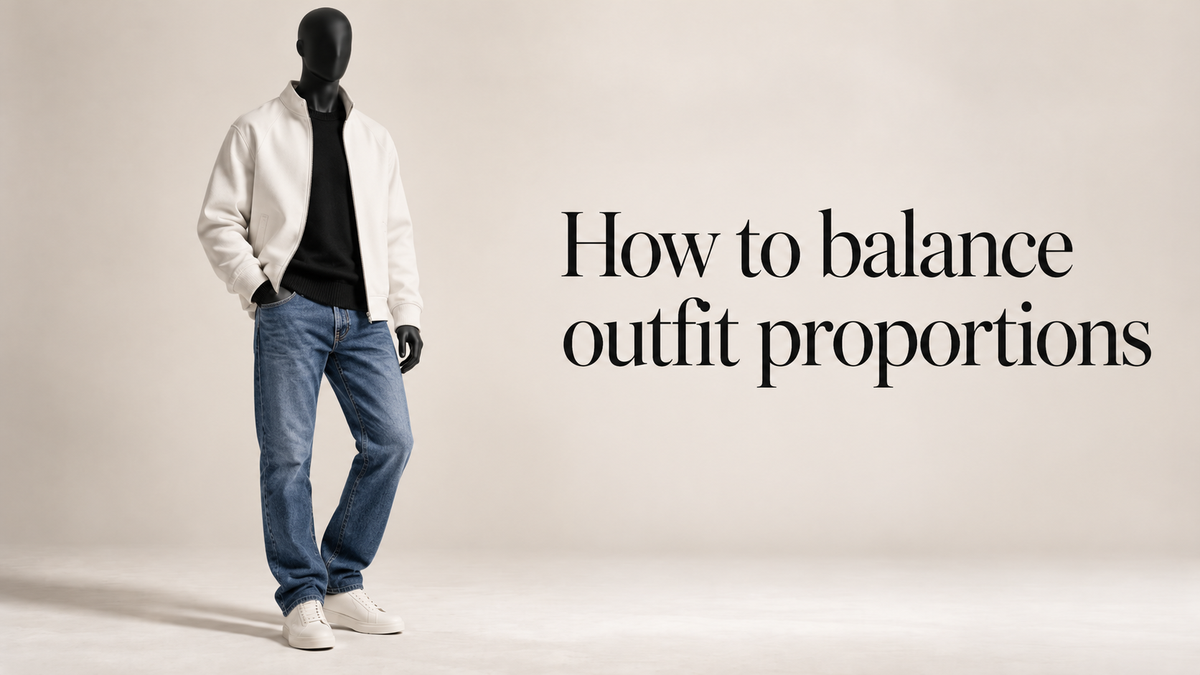
A strong outfit is not only about colour or individual items. It is also about shape: how the pieces sit together, where they finish and how they move with you. Understanding proportions can make even the simplest combination feel more considered.
Think about the full silhouette
Before deciding whether something looks right, step back and look at the whole outfit. A roomy jacket changes the way trousers appear. A longer top can make the legs look shorter, while a cropped outer layer may create the opposite effect. Neither result is automatically bad; the question is whether the overall shape matches what you are going for.
Rather than following a universal rule about what you should wear, experiment with where the volume sits and which part of the outfit you want to emphasise.
Pair a relaxed piece with a cleaner line
One dependable starting point is to combine something relaxed with something more defined. For example, a loose knit with straight trousers feels balanced without being restrictive. Wide-leg trousers with a neat T-shirt and a structured jacket create an equally simple silhouette.
This does not mean every oversized top needs slim trousers. It simply means that, when an outfit feels shapeless, changing the cut of one piece is often more effective than replacing everything.
Oversized on oversized can work
Relaxed outerwear and roomy trousers can make a strong outfit together. To keep the look intentional, pay attention to the breaks in the silhouette: an open jacket revealing a shorter top, a visible neckline, a cuffed sleeve or the way the trousers fall over the shoes.
Pieces with structure—such as a jacket with defined shoulders or trousers with a clean drape—can also help roomy outfits feel deliberate rather than simply too big.
Use hemlines to shape the look
Where a garment ends can matter as much as how wide it is. A jacket that stops at the hip creates a different impression from one extending below it. Similarly, trousers that sit neatly over footwear feel different from ones pooling heavily at the ankle.
- For a sharper silhouette: try a shorter outer layer with straight or wide trousers.
- For an easy layered feel: let a longer T-shirt show slightly beneath an open overshirt.
- For a cleaner finish: adjust trouser length or try a small cuff where it suits the fabric.
Footwear completes the proportions
Chunky trainers can visually support wide trousers and substantial outerwear. Sleeker shoes can create contrast and make the same trousers feel more refined. A taller boot changes where the eye sees the leg ending. Try at least two footwear options before deciding a trouser shape is not working.
Three outfit shapes worth testing
- Relaxed and clean: oversized sweatshirt, straight jeans, simple trainers.
- Structured and wide: cropped jacket, plain top, wide-leg trousers, substantial shoes.
- Easy tailoring: relaxed blazer, fine-gauge knit, straight trousers, loafers or minimal trainers.
Fit still matters
Oversized is a design choice; poor fit is something different. Check shoulder placement, sleeve length, the waistband and how easily you can move. A deliberate oversized shape should still feel comfortable and make sense with the rest of your outfit.
Try changing one shape at a time in the Label’d Outfit Builder. Comparing the same top with different bottoms or outerwear can reveal which combinations suit your personal style.
Find pieces for your look
Compare the shapes in Men’s Designer Trousers & Pants, Women’s Designer Trousers and Men’s Designer Jackets. Use the sizing and fit details supplied on each listing rather than assuming two brands will fit alike.

